A Trip Remembered
Vito (Billy) and Cristina's "Hit the Road and Go" Italy Trip 2026 - 24 Places in 8 Days!
Documented by Unknown
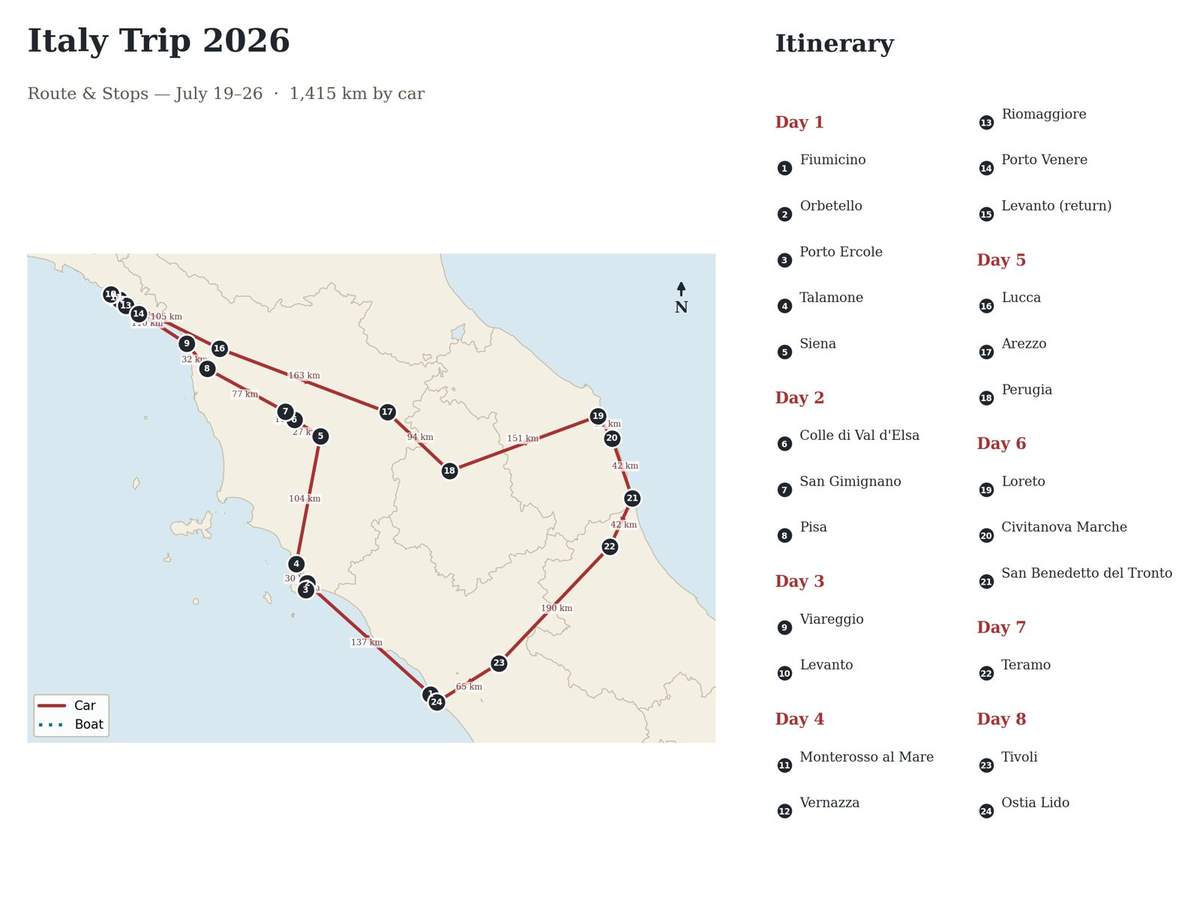
Another "Hit the Road and Go" adventure in Italy. We just rent a car and go... This was an eight-day loop through central Italy, starting and ending near Rome. The route traces the Tuscan coast and hill towns, crosses to the Cinque Terre for a day of boat-hopping between cliffside villages, cuts back through Tuscany and Umbria, follows the Adriatic coast south, and finishes with a run through Teramo to meet Vito's long-time friend Anton Roolaardt, who was performing with his band at the MoonJune Music Festival. Then we returned home with Anton, with a quick stop at Tivoli, and then back home to Ostia. In total, the trip covered about 1,415 km by car across 8 days, plus a full day on the water along the Ligurian coast at Cinque Terre, where we traveled by boat to visit different towns, including Porto Venere.
It was, overall, an exhilarating adventure that we will never forget, and one that we have tried to capture here to share with family and friends. Needless to say, we only scratched the surface in visiting these places; each one of them warranted a multi-day stay to truly capture and experience. Many places we visited that were really outstanding, such as "Colle D'Elsa", were not full of tourists at all and still wonderful, yet others like San Gimignano (only a few kilometers away) were bustling with tourists. Overall, it was an amazing adventure and quite an unexpected accomplishment to see 23 places in 8 days with nothing planned at all. It will be hard to capture what we experienced—the emotion and the sense of total awe and discovery of such wondrous and exquisite beauty that you sense in visiting these places—however, here goes! (Please note that this recount is from my (Vito's) recollection of things; hopefully, Cristina will provide her recollections as well soon.)
✦
Day 1July 18, 2026
We rented our car at the usual stop-n-go place at Fiumicino Airport and, thanks to my buddy Carlo D'Alatri, were able to leave our "Smart" car in the lot of the rental company. We set our sights North...
Fiumicino - Car Rental
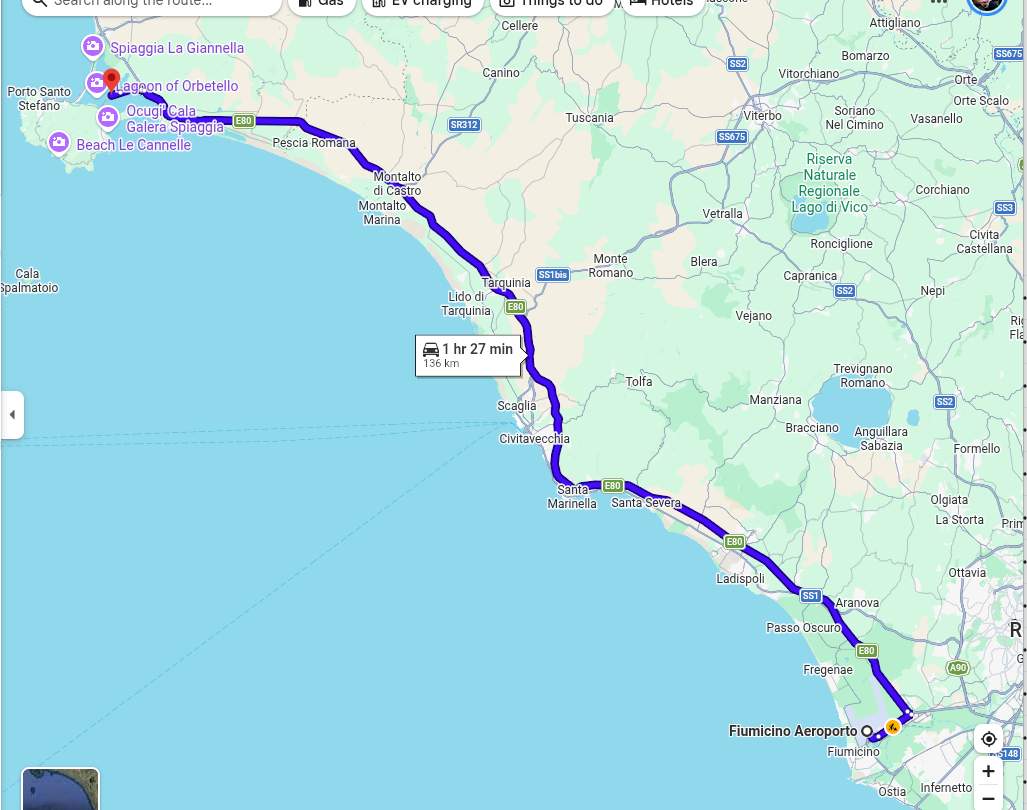
The trip began at Fiumicino, where we rented the car, a Citroën C3, and we chose to head north with the intention to ideally reach Ivrea, where Vito used to work for Olivetti, but we were willing to settle on getting to Genova if that were not possible... needless to say, we never made it that far north, but we did get close.
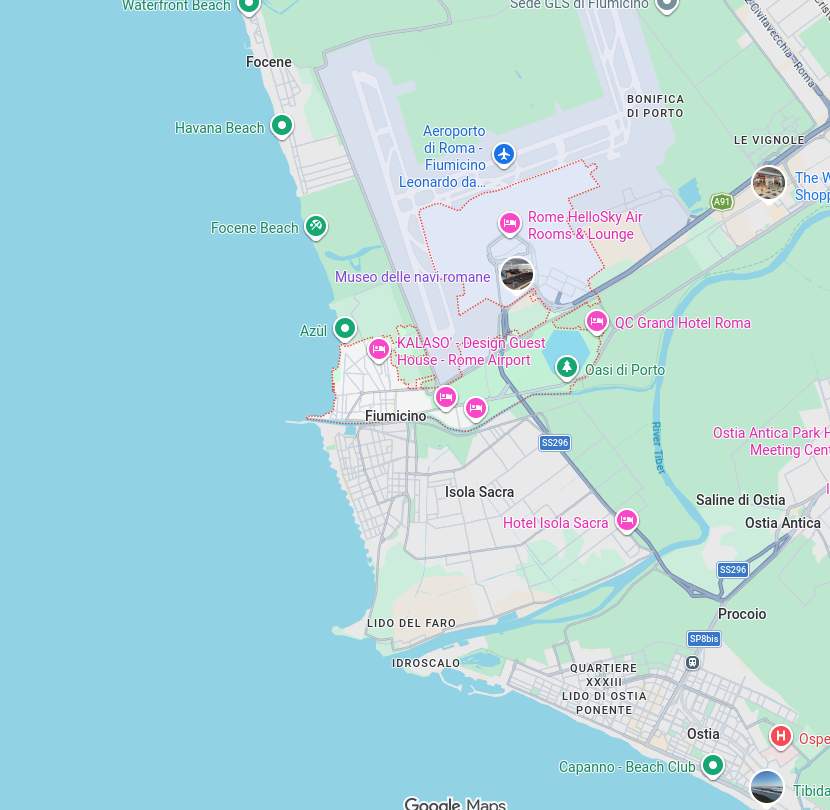
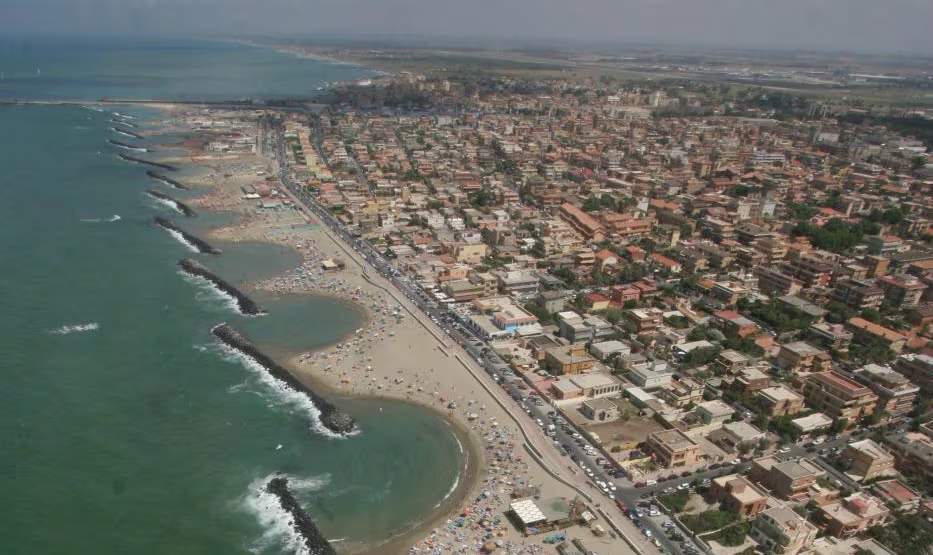
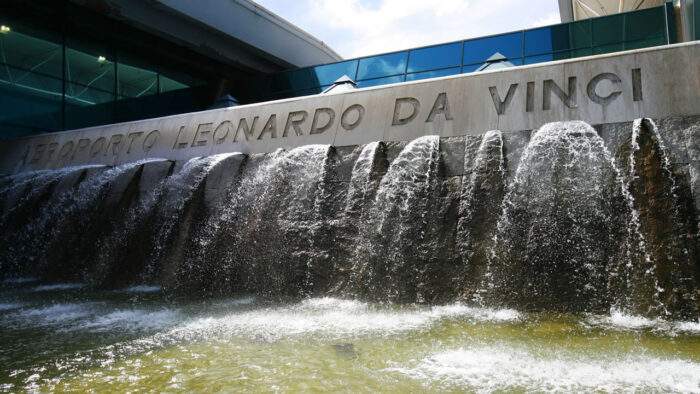
Even though we did not visit Fiumicino, here are a few words on this coastal town, where we go fairly often. It is just southwest of Rome, best known today as the site of Leonardo da Vinci–Fiumicino Airport. Its harbor still supports a working fishing fleet, and the seafront is lined with seafood restaurants. The beach area is actually very nice and well organized.
Orbetello
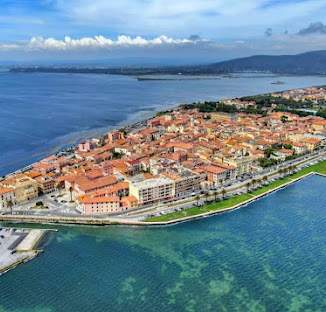
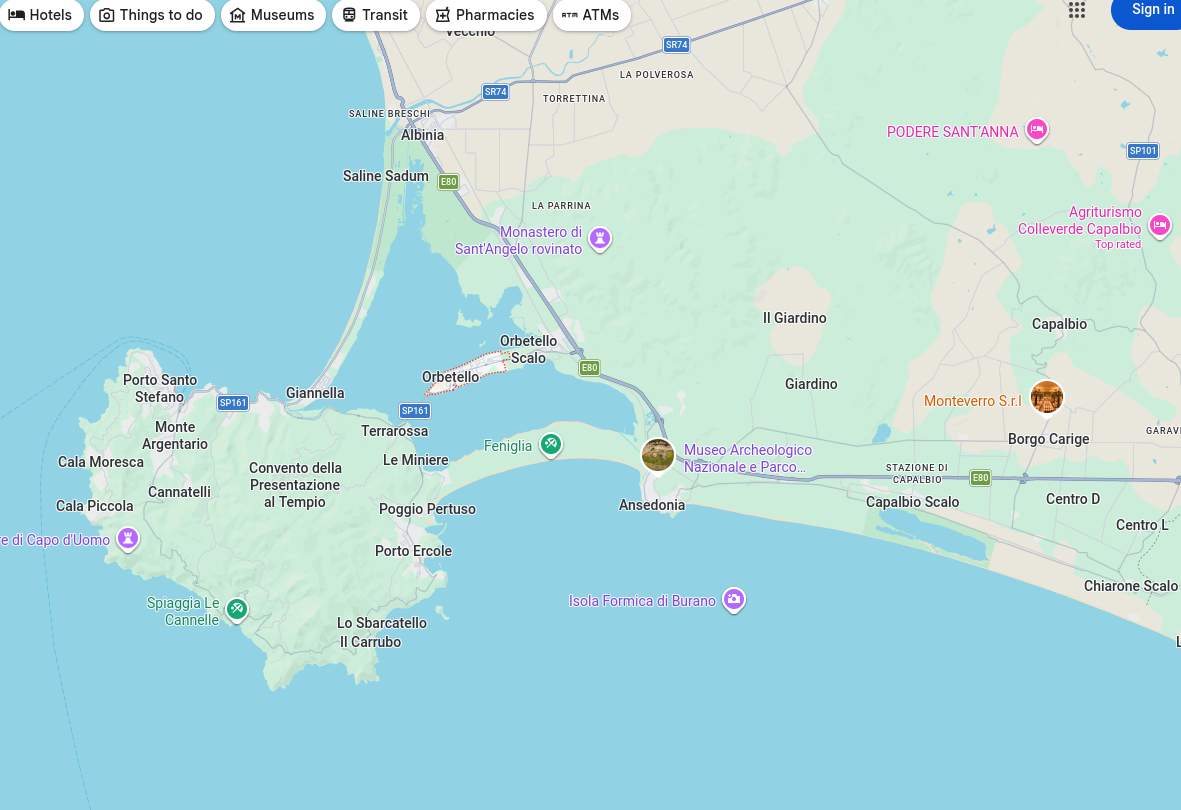
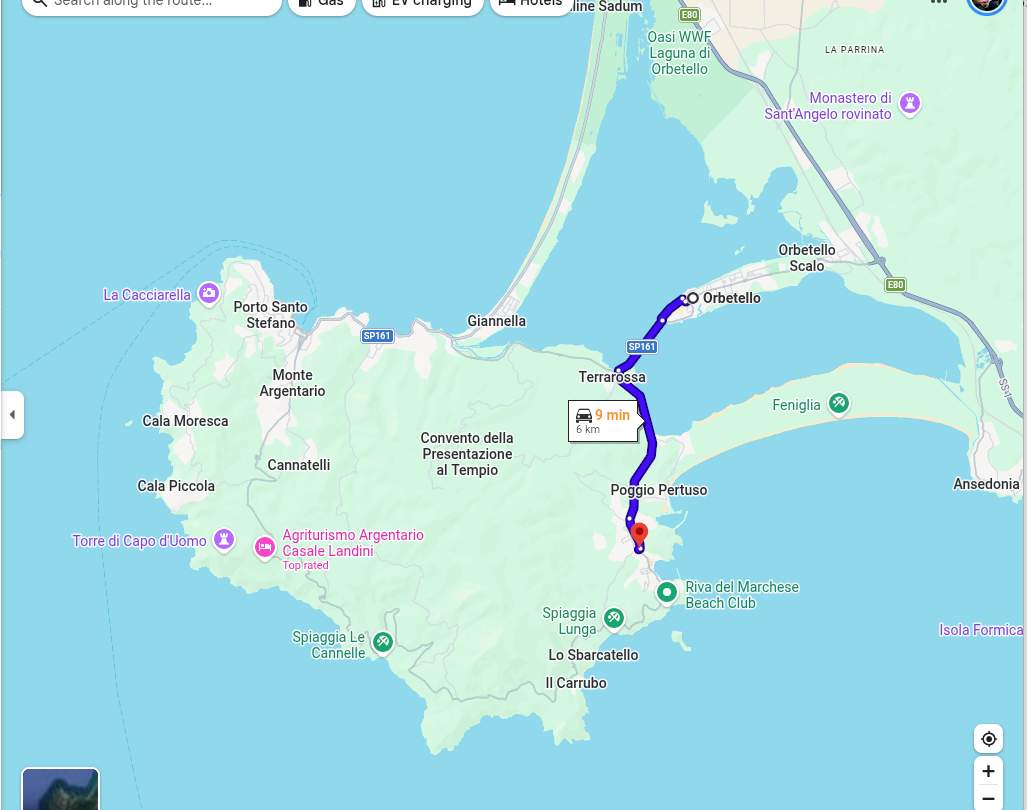
So we headed north and hit the Tuscan Maremma. The navigator showed a small peninsula of land in the middle of a lake that was closed off from the ocean, Orbetello. I remember for some strange reason my father mentioning this place... So we set our sights on stopping at Orbetello. We ended up towards the tip of the peninsula town, took some photos from the shore and found a restaurant for lunch. There didn't seem to be that much to see there, so after lunch we moved on. We noticed that from the peninsula there was a passageway over the lake to get to the other side... and a town called Porto Ercole... it looked interesting... so off we went. It was around 1:30-2 PM. But before we leave, let me get some info on Orbetello and post it here as well!!
Orbetello
Orbetello
A small harbor town on the Monte Argentario promontory, guarded by three 16th-century Spanish fortresses built to defend the coast. The painter Caravaggio died here in 1610. Orbetello was an ancient Etruscan settlement, which in 280 BC passed under the control of the Romans, who had founded their colony of Cosa (near the modern Ansedonia).So there you have it... there was a lot to see in Orbetello, but ours was just a quick stop... will have to go back!!!
The Roman family of the Domitii Ahenobarbi had a substantial property here, subsequently inherited by the emperor Domitian through his wife Domitia Longina. Domitian built other sumptuous villas nearby for his courtiers......
Porto Ercole
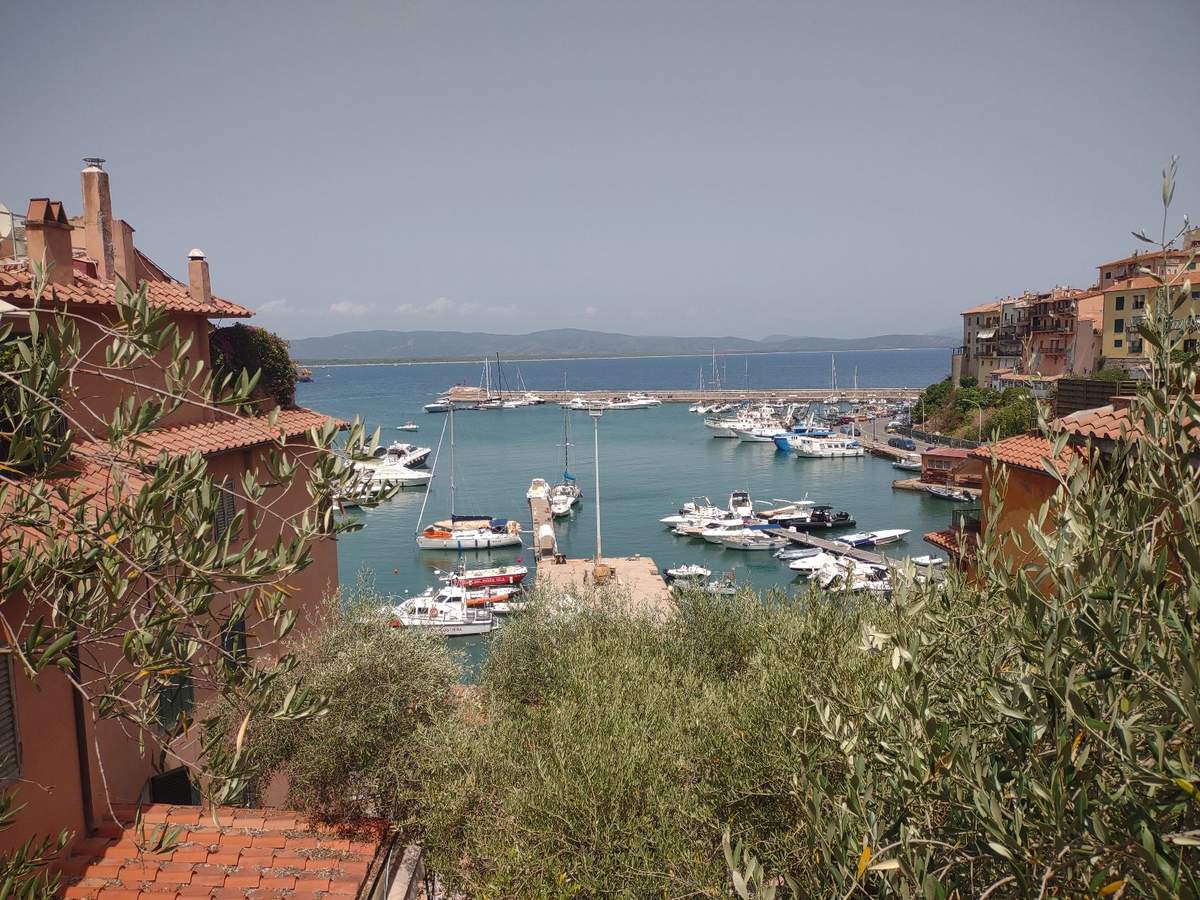
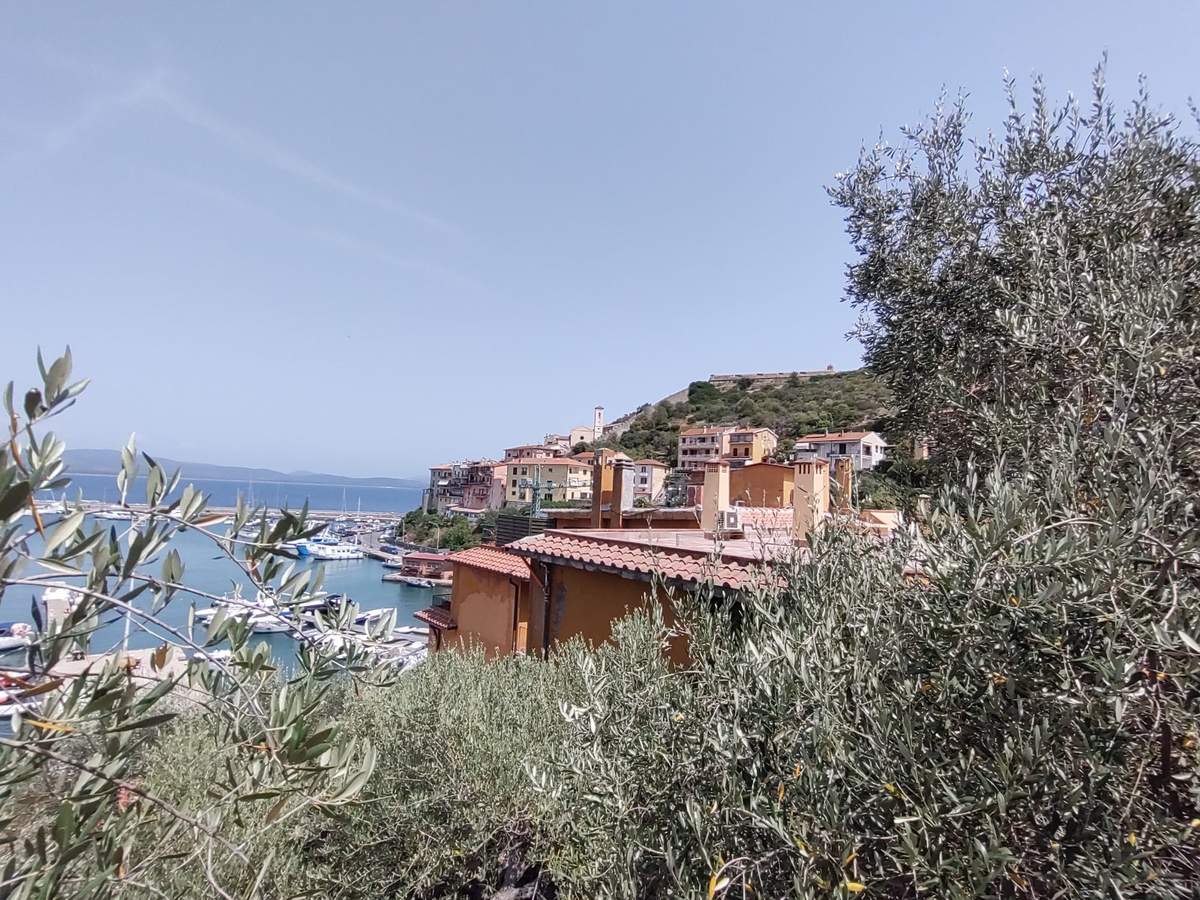
We noticed that you could go across the Lagoon of Orbetello and that on the other side there were a few towns that were on the water... so off we went... The first stop was Porto Ercole. The scenery was lush and very picturesque, but we were going up hills. In fact, when we stopped to take a look, we were blown away by the view... and lo and behold, there was a beach below... but to get to it, you had to follow a road down on foot... about a 2 km walk... it was worth it—see the photos. Before we leave, let's see what we can find on Porto Ercole.
Porto Ercole
Porto Ercole
Porto Ercole (Italian: [ˈpɔrto ˈɛrkole]) is an Italian town located in the municipality of Monte Argentario, in the Province of Grosseto, Tuscany. It is one of the two major towns that form the township, along with Porto Santo Stefano. Its name means "Port Hercules". It is one of I Borghi più belli d'Italia ("The most beautiful villages of Italy").So it is simply a wonderful resort town... certainly beautiful!!
Talamone
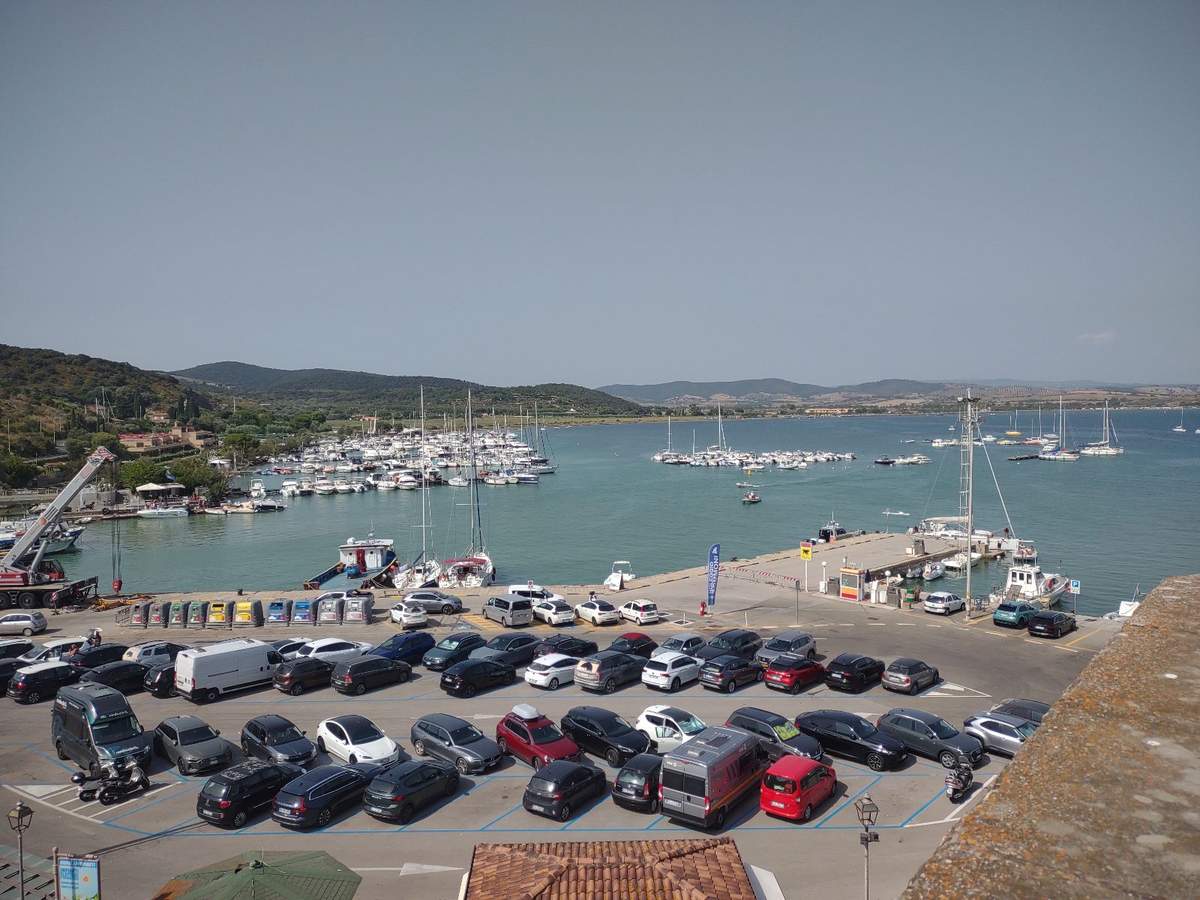
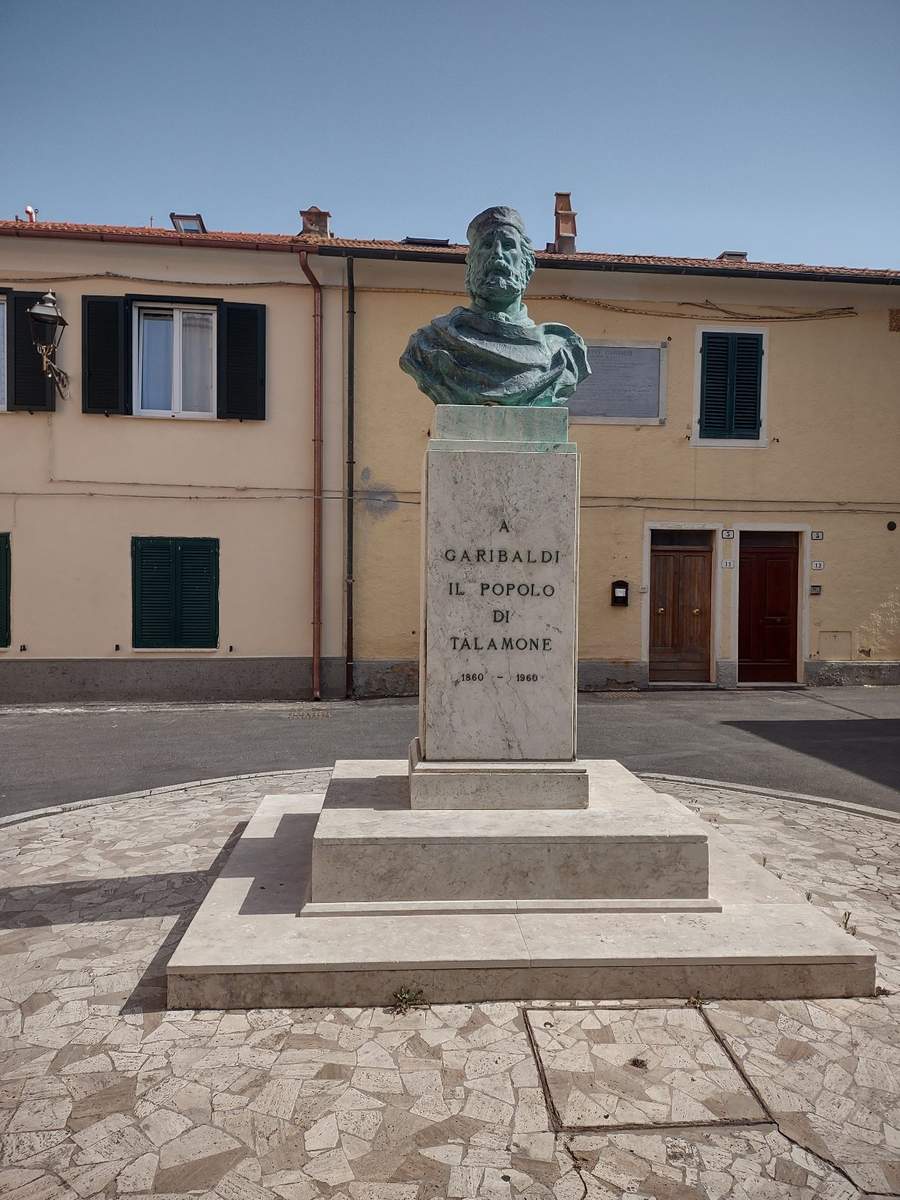
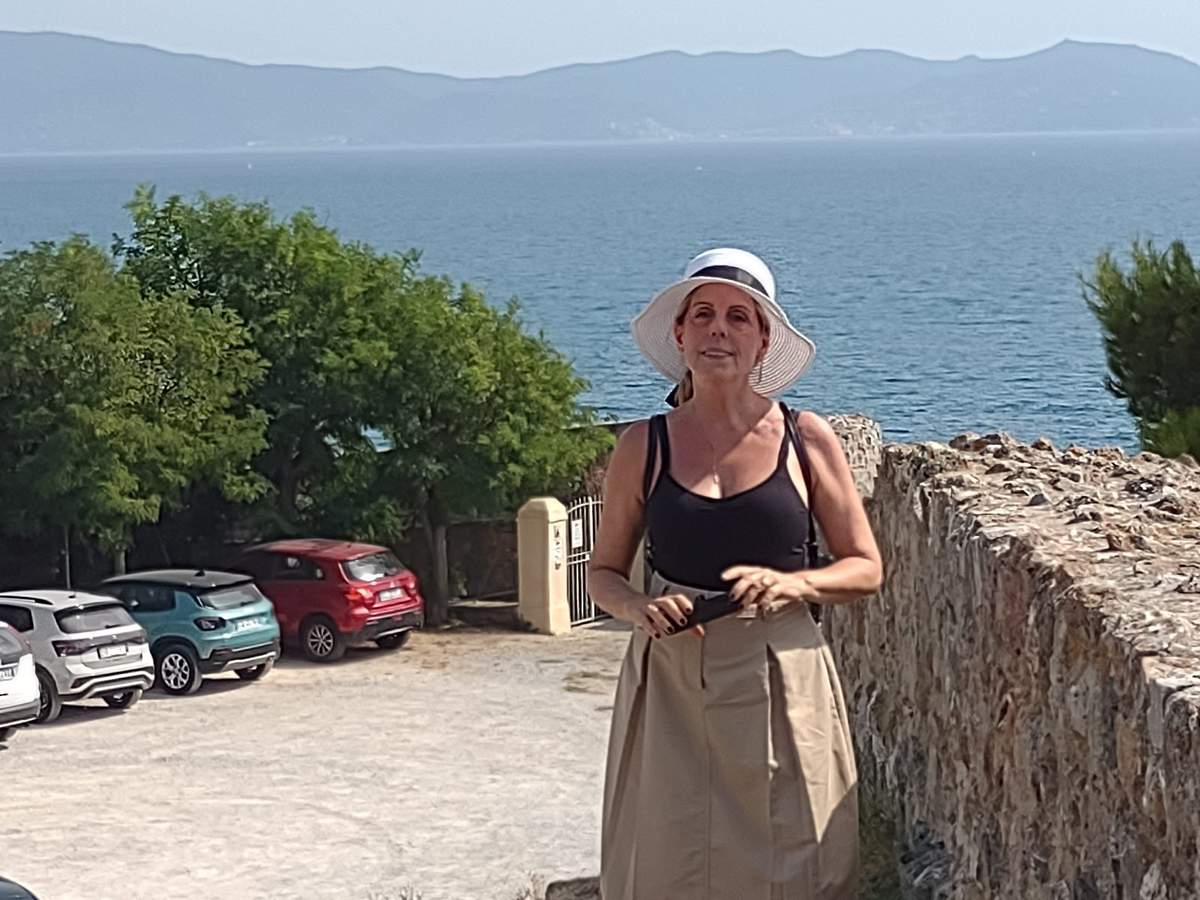
So we continue our trip, heading north to a town we spot on the navigator, Talamone, which turns out to be a fishing village on a rocky headland at the southern edge of the Maremma, overlooked by a medieval fortress. It sits at the edge of the Parco Naturale della Maremma. We got into the port area and went exploring... indeed, there were medieval walls to enter and the historical part of town was uphill. We walked through the tight streets and then followed the side with the view of the water. We could see beaches and many people down there bathing. This time we were not going to walk down to the beach, though. There were signs of a fortress and even signs of some WW2 posts—not sure—but we got to a high point and took pictures. We stopped for ice cream in the plaza and headed towards our final stop for the day, Siena. Here's some info on Talamone:
Talamone
Talamone
"It was an ancient and flourishing city already during the Etruscan period. It was the site of the Battle of Telamon in 225 BC between Roman and the Celtic armies.[2] After the Celts had overrun Etruria and killed 6000 Romans at Faesulae, they were advancing to Rome led by the Gaesatae kings Concolitanus and Aneroëstes. They were met by the Romans near Talamone and were defeated, 40000 Celts being killed. The decisive victory removed the Celtic threat from Rome and allowed the Romans to extend their influence over northern Italy...."
Siena
So we set our sites on Siena.. only 105 Km away!!!..A Tuscan hill city built around the shell-shaped Piazza del Campo, home to the twice-yearly Palio horse race. Its Gothic cathedral and medieval streets have changed little since the city's height as a rival to Florence in the 13th and 14th centuries. When we get there we will check out booking.com to find a place for the night. This is what we typically do on these trips.. we get to the destination and find a place for the night hopefully close to where ever the navigator leaves us and at a decent rate. Getting into Siena was not a clean run though there were many points where construction was underway, but we finally arrive it was probably around 6PM. We found a place for the night that seemed just right about 2Km from where we stopped, the place had parking and was near the center.. perfect. Dial in the address into the navigator and off we go.. Well here is where it got real complicated. The navigator would take us to a place where roads either were one-way or in other cases blocked off to traffic "zona TL" Limited traffic. We went around in circles for about an hour. We finally stopped about 800m from the hotel and decided to leave the car there. I called the hotel and told them where we were. They told us to leave that area immediately as it was a restricted zone. I told them our dilemma and asked if I could cancel the reservation because it was impossible to get to their establishment. They told me that the reservation could not be cancelled and offered to guide us to the Hotel. So we hopped back into the care and the Hotel receptionist gave us instructions .."are you near the gas station?... what do you see on your right?" It basically required us to go around to the other side of the city to a different "Porta" .. we made it but the hotel had no more parking spots so they indicated a public parking area and we walked to the hotel. We made it!!
The hotel was beautiful an old residence of monks transformed into a hotel... we had to walk up 2 flights of stairs but the room and to view to the Tuscan country side (Siena is on a hill) was breathtaking. Its now about 9 PM ... fortunately we were near the center of Siena so we went out and found a small restaurant that was still serving.. the food was very good. After dinner we took a walk around town. At night you would never think of being a tourist but at night these places are alive. We soon hit upon the plaza where they have the famous "Palio" horse races.. there was a huge stage set up and a full Orchestra was playing some wonderful music (I forgot the composer) the area was gated off so if you wanted to sit you had to pay and we came late.. we listened for a while and moved on. We proceeded to see different areas and churches that all seemed very beautiful. I noticed that Siena has a music conservatory and has many concerts programmed for the summer. See the pictures. We stayed out till passed midnight and scurried back to our hotel. We would continue with some more explorations in the morning after breakfast.
After breakfast we took a brief walk to the center again and for some reason decided to move on. But before we leave let's check out some info on Siena.
Siena
Siena
"Siena was an important city in medieval Europe, and its historic centre is a UNESCO World Heritage Site, which contains several buildings from the 13th and 14th centuries. The city is famous for its cuisine, art, museums, medieval cityscape and the Palio, a horse race held twice a year in Piazza del Campo...."And off we went to our next place.. we had strayed away from the coast now we head back northeast towards Genoa. What will we find along the way?
Day 2July 19, 2026
From Siena the route continued through the Tuscan countryside to Colle di Val d'Elsa and the medieval towers of San Gimignano, finishing the day in Pisa. From Siena we took the local roads. It was beautiful, but the 50 Km speed limit and the extensive series of winding roads got tiresome after a couple of hours, so we decided to move back to a major highway. We had our sights set on Genoa. But hold on, what's that town up on the hill to the left? Colle di Val d'Elsa... let's check it out!!!
Overall, this second day was a series of explorations that landed us in Pisa, which we ended up exploring past midnight.
Colle di Val d'Elsa
A Tuscan town in two parts: a lower modern district and an upper medieval hilltop town known historically for crystal glassmaking. The upper town's narrow main street runs the length of the ridge it sits on. But, even the lower part meant getting up the hill to the more modern area this took some figuring out as parking was restricted. We parked outside the midlevel walls that we found and asked if it was ok to park there. The answer was "No" we could be fined, but the person indicated a public parking area. From this parking area there were a series of climbing stairs to get to the historical area of the town. Surprisingly there were very little in terms of tourists wondering around inside the midievel walls which offered a glimpse of the life of those times we were basically alone in our exploration, which did include different chambers and church halls. Weird. On the way back to the care we stopped for coffee in which I gave my sister a call, she said you should se San Gimignano...also my friend Carlo told us that his ex-wife's family were from Colle di Val d'Elsa.. small world. Well it turned out San Gimignano wasn't far. .. so off we went. But lets see what we can find out about Colle di Val d'Elsa before we move on!
Colle di Val d'Elsa
Colle di Val d'Elsa
"he oldest part of the town is "Colle Alta", with a well-preserved medieval centre. The village is entered through the ancient and monumental Porta Nova and winds its long and narrow way in a sequence of fine 16th- and 17th-century noble houses (notable are Palazzo Usimbardi, Palazzo Buoninsegni and the Town Hall) to the Palazzo Campana, which marks the entry to the Castle, the oldest part of Colle di Val d'Elsa. Here, the village is characterized by narrow paved lanes, 15th- and 16th-century noble houses (such as Palazzo Luci, Palazzo Morozzi, Palazzo Giusti, Palazzo Dini) and tower-houses, including the one where Arnolfo di Cambio was born. At the centre of the old town stands the Colle di Val d'Elsa Cathedral. Overlooking the valley stands the Convent of San Francesco. It turns out this town has a manufacturing history and is well known for "Crystal" production...."Now on the San Gimignano!!
San Gimignano
The drive to San Gimignano was quick only 16 km what we found was a tourist town.. full of tourists. The town offered many public parking areas and we parked close to what seemed to be one of the main "Porta"s as with we have now become accustomed to visiting these towns. San Gimgnano is a walled hill town famous for its medieval stone towers, originally built by rival noble families as symbols of wealth and defense. Fourteen towers survive of the dozens that once stood. We walked the streets filled of tourists and many stores, many offering regional food stuff like dried meats, sausages and cheeses and sweets and even chocolate.. others were souvenirs and cloths. We had a nice coffee tried to find some historical things to see but nothing really readily presented itself so we moved on .. but before we do let's find out something about San Gimignano
San Gimignano
San Gimignano
"San Gimignano (Italian pronunciation: [san dʒimiɲˈɲaːno]; named after St. Geminianus) is a small walled medieval hill town in the province of Siena, Tuscany, north-central Italy. Known as the Town of Five Towers, San Gimignano is famous for its medieval architecture, unique in the preservation of about a dozen of its tower houses,[3] which, with its hilltop setting and encircling walls, form "an unforgettable skyline".[4] Within the walls, the well-preserved buildings include notable examples of both Romanesque and Gothic architecture, with outstanding examples of secular buildings as well as churches. The Palazzo Comunale, the Collegiata and Church of Sant'Agostino contain frescos, including cycles dating from the 14th and 15th centuries.[4] The "Historic Centre of San Gimignano" is a UNESCO World Heritage Site.[4] The town is also known for saffron, its dry-aged and saffron infused Golden Ham, pecorino cheese, and local white wine—Vernaccia di San Gimignano—produced from the ancient variety of Vernaccia grape grown on the sandstone hillsides of the area...."So a quick look at the map.. and there it is Pisa next stop about 80 km away..
Pisa
Given our experience with local roads to Siena we went straight for the highway route and got quickly to Pisa. As usual, we stopped near the center of town and when to booking.com to find a decent place to stay near the center with parking and at a good price. This was not so easy this time especially in terms of parking and price. We found something that looked ok about 4 km from the center of town. Once again getting there was a nightmare there was road construction that the navigator did not know how to compensate for and when we got close to the place the navigator just could not get us there. Once more we had to call, this time the person was less helpful but we did manage to find the place. It was now early evening time to eat.. this was not the center of town, sort of a business district, but we found a cozy place we had to walk a couple of km to get there and there all we saw was signs of a modern city nothing charming. After dinner we decided to go to the center to visit the historical area. Only 4 km by car... yes but Pisa is fill of traffic limitations accessing the center of town and the navigator once more doesn't know about these.. it took some figuring out but we parked close to another "Porta" and now it is about 10 pm or so walked, I would say a good 3 km to get to the tower area. The evening walk was pleasant and the surroundings not very historical, but when we got to the tower and the plaza probably around 10:30 11 PM we were blown away. The tower naturally was illuminated.. and even at that time there were plenty of tourists and people walking around (this made us feel a bit safer). Pisa is a city on the Arno river best known for the Leaning Tower in the Piazza dei Miracoli, alongside its cathedral and baptistery. It was once a powerful maritime republic before its decline in the 15th century. We walked around the tower and plaza and were in awe.. it was past midnight when we started to walk back. When we did it was hard to get back to the hotel because of the navigation issues, we also discovered that the car gas gauge showed 0 gas even though when we got to Pisa it was 1/2 full.. so we were stressed at trying to get back and also trying to get gas.. but we managed. So lets find out a little something about this wonderous place named Pisa
Pisa
Pisa
"Pisa is a city and comune (municipality) in Tuscany, Central Italy, straddling the Arno just before it empties into the Ligurian Sea. It is the capital city of the Province of Pisa. Although Pisa is known worldwide for the Leaning Tower of Pisa, the city contains more than twenty other historic churches, and several medieval and Renaissance palaces, mostly facing each other on the avenues along the Arno ("Lungarno"). Much of the city's architecture was financed from its history as one of the Italian maritime republics...."We finally got back to the B&B pretty tired but the sense of awe left from the plaza and tower lingered on, the fact that we were there in the night with the tower illuminated and less tourists, I believe enhanced the experience. We got up went to the cafe that helped us find the B&B the day before had a nice breakfast and decided to move on. Getting to the center during the day was not something we wanted to face and the experience from the night before was plenty. Time to head back to the coast...
Day 3July 20, 2026
We traveled toward the coast, trying to hug the shoreline—not as easy as it sounds, since you generally have to stick to the highway, and those roads aren't right next to the beach. Eventually, though, we reached the water and rolled into Viareggio.
Overall, our third day was a coastal run from Pisa to Viareggio, then north along the Ligurian coast to Levanto—the gateway to the coveted Cinque Terre, which we had heard so much praise for. In all honesty, our expectations weren't very high; from what we saw online, it felt like tourist hype. We shall see!
Viareggio
We arrived at Viareggio. We didn't know anything about it except it's name, but it's a coastal resort town known for its Art Nouveau and Art Deco seafront architecture and its massive annual Carnevale, famous for elaborate papier-mâché floats (thanks to the internet, naturally).
We stopped randomly at a beach club, wandered in, and grabbed some coffee. Great service, beautifully organized—definitely a few levels up from Ostia. There were pools, amenities, and a wide sandy beach, so we went for a walk. We stopped to take a picture and realized: wow, there are mountains right nearby. Talk about the best of both worlds!
After taking a few photos, we continued down the coastal road. The GPS kept trying to push us back to the highway, but we refused. And here’s the thing: the gorgeous beach clubs just kept coming, for miles and miles. Eventually, we gave in and got back on the highway. What an incredible place Viareggiois—time to dig into the net for a bit more info."
Viareggio
Viareggio
"The first mention of Viareggio dates back to 1169 when a wooden tower guarding the coast was built. A little over two years later, in (1172) a military building named Turris de Via Regia was erected, taking its name from the road that linked it to Lucca (known today as via Montramito). In the following years the area around Viareggio, was involved in the hostilities between Pisa and Lucca, in their attempt to gain control over the coastal area. The conflict was spurred by the desire of the Lucchesi to finally gain access to the sea, and to the Pisane fear of the economic competition of its rival city. It is during these years that the feudal Lords of Versilia were forced to abdicate in favour of Castruccio Castracani. In the following years the area upon which Viareggio would eventually be built was marked by a number of minor battles, invasions and pillages. In addition, the area was also affected by the pestilence which, recounted by Giovanni Boccaccio in his masterpiece the Decameron, spread throughout the whole of Italy...."So where do we go next? Levanto and Cinque Terre! Again talking to my sister Mary Anne.. "you gotta see Cinque Terre".. we had looked on the internet and it did not really see that appealing just touristy stuff... but my sister and Carlo her husband told us that that was really not what Cinque Terre was all about.. so ok let's give it a go. So we insist on following the beach road "lungo mare" even though the navigator says turn right to the highway to get to Levanto now our next planned stop..
Levanto
So we head towards to Levanto a beach town just north of the Cinque Terre, with a wide sandy bay and a well-preserved old town. It serves as a convenient base and rail/boat gateway for visiting the five villages to its south. We get to Levanto and immediate find a public parking lot with an overlook to the beaches and the see, lovely!! So we park and start exploring, there are a lot of people on the streets but not too crowded. The town is lovely, quaint not ancient but the architecture is late 800s or early 19 hundreds.. we find a place to have lunch. Here Cristina enjoys a salad that till this day she still raves about.. will have to wait for her to comment on that! I get a class of wine.. about 2 fingers worth.. ok I guess the bottle was at the end. ... the food was good overall, nothing to complain about. We decided to stay in Levanto so we were pretty tired and wanted to rest up a bit before taking on the Cinque Terre which we still had no idea how we would be adventuring to visit them .. first lets find a place for the night. This time we decided... no Booking.com... lets find a place in the city and avoid trying to figure out how to get there. In fact in the line of site there was already a couple of hotels. So after lunch we go check them out the first one was booked.. so was the second one, but the receptionist found us another hotel fairly close by that had parking.. so we walked over to Hotel "Dora" the price was substantially higher than any of places we stayed before.. but we looked at booking and if we wanted to stay in the city that was a decent price. So we go to the hotel .. but there is no parking available but they gave us a pass to park on the street which was fine. There was supermarket right in front of the Hotel so we got some water and other supplies and took a nap for a couple of hours. The hotel room was ok but not as nice as Siena that was half the price!! But the staff were super nice and after trying to figure out how to visit the Cinque Terre on line which only had touristy stuff .. we talked to the receptionist and was informed that while you can't go to any of the coastal towns by car as there is no parking you can take the train that was close to the Hotel or you can take a boat by the beaches where we initially parked. Perfect we would do the boat to go and train to return!!!!!!
That evening we found a restaurant for dinner, this was not an easy undertaking a lot of people and although there were a lot of restaurants no places were available in the places we picked. We get down close to the beach and the last restaurant towards the people had seats.. oh no the food is probably not good. The food was fine and the service was good as well. After dinner we went exploring. In the plaza where we had dinner were a series of evening concerts very cool!!!!! We found our way to what looked like a castle but did not figure out how to get to it then we found a beautiful Gothic church and on the way back there was a street musician doing Bob Dylan... he was really good!!!! We then check the plaza for the music and it was nice but they were playing traditional north Italian dance music "Balera" stuff. They were good. .. but I don't dance.
We headed back to hotel with a full belly and a plan for the next day!!! Let's find some info on Levanto !!
Levanto
Levanto
"Levanto first became the feudal stronghold of the Malaspina before passing to the Da Passano and then, in 1229, to the Republic of Genoa. In the Middle Ages, the village became a centre of commercial activity, benefiting from maritime and overland travel, the most important of the latter routes being the Via Francigena, the ancient pilgrims' way that in medieval times connected Canterbury to Rome. In the post-Medieval period, the village saw major development with the construction of the Borgo Nuovo or Stagno, largely completed by the 17th century, on the plain of the small river Ghiararo. This area is characterized by painted 17th- and 18th-century houses, some built on much earlier buildings. A further phase of urban development took place at the turn of the 20th century with the opening of two new thoroughfares, the Corso Italia and Corso Roma. Beginning in 1950, the village experienced further growth, culminating during the 1970s in the present townscape...."Good night see you in the morning!!!
Day 4July 21, 2026
A full day exploring the Cinque Terre by boat, hopping between Monterosso al Mare, Vernazza, Riomaggiore, and Porto Venere before returning to Levanto in the evening. In the morning, we had a nice breakfast and asked for directions to the port where we could catch the boat. It was about 1.5 km, a 15-minute walk. So off we went. It was a pleasant walk, with the last portion on a promenade overlooking the beach area. Very nice. We got to the boat pier, which was narrow with no railing, along a rocky area that included a building. The boat was catamaran-style, fairly large, and very comfortable. It reminded me of my days commuting to New York, although those boats were larger. First stop, Monterosso!!
Monterosso al Mare - Boat Ride
Monterrosso is the largest and westernmost of the Cinque Terre villages, and the only one with a proper sandy beach. Its old town sits behind a headland, connected to a newer seafront district. The ride was brief maybe 10 minutes. We got off and noticed everything was uphill!!! So off we went there were many tourists many shops and many restaurants. We did hit upon some small Gothic churches.. lets see what we find on Monterosso
Monte Rosso al Mare
Monte Rosso al Mare
"The first historical information regarding Monterosso date back to 1201, when the lords of Lagneto, owners of the castle of which today only some ruins remain, made an agreement with Genoa. In 1214 the Monterosso's community was established, and the first fortifications were built to protect the hamlet from the invasion of the Saracens, so that this became the most majestic defense system in the Cinque Terre. The village loved by Eugenio Montale..."We hung out a bit got an ice cream and decided to move on to the next town.
Vernazza
Vernazza was also very picturesque it seemed more extensive with larger beach fronts and a larger fishing port. Two sections f the town seemed to be divided by a mountain and there was a tunnel that allowed you to go through to access the other side. We saw numerous "bunker" style constructions on one side of the tunnel no doubt from WWII. Vernazza is considered one of the most picturesque of the Cinque Terre villages, built around a small natural harbor with pastel houses rising up the hillside behind it and a medieval castle above the water. Lets find out more..
Vernazza
Vernazza
" Vernazza has a natural pier with a amphitheatre shape making it perhaps the most picturesque village of the Cinque Terre. Vernazza was a Roman installation and had a big strategical importance during the age of the Maritime Republics in Genoa. It was also famous for its carpenters. We suggest a walk in the village that is dominated by a watch tower and the "Castello" remains. In the small square, overlooking the seaside, there is the Church of Santa Margherita di Antiochia. Vernazza is the village with the safest and most convenient port in Cinque Terre. The seafaring skill of its people has been famous since the old times. Historically mentioned since 1050, it has enjoyed political importance and wealth, witnessed by the fashion of the houses, rich in balconies and arcades. Here as well the place-name comes from an old Roman family name, Vulnetia, whose slaves, after being set free, took possession of these lands. You can visit The Nostra Signora di Reggio Sanctuary, Church in the hills behind Vernazza (350 meter), dating from the 13th century. Take the Sentiero N° 8 to get there. ..."We walked around, a lot of tourists.. lovely.. on to the next town... On the way to the boat standing on line there were many kids jumping off the high rocks into the sea.. scary!
Riomaggiore -Skipped!
Then next towns were Cornaglia and Manarola..from the boat they seemed smaller than Monterosso and Vernazza we decided to move on to the next town Riomaggiore which should be "maggiore"... Riomaggiore is the southernmost of the Cinque Terre villages, with tall colorful houses stacked along a narrow ravine leading down to a small rocky harbor. It's connected to Manarola by the Via dell'Amore coastal path. We actually got to Riomaggiore.. we were about to get off.. when we decided to move on to Porto Venere.. it seemed like more of the same.. and between the heat and all the walking up hill.. we were getting tired.
Porto Venere
Porto Venere was the most impressive of all the towns we visited by boat. It is not considered part of the Cinque Terre towns, in fact the train we were planning to take back does not go to Porto Venere, so ineffect we took another boat back to Levanto. We came into a bay area where there was the port of with on looking fort and ancient constructions overlooking the port. At the port where we got off we found a restaurant, it was very nice had lunch and adventured up the hill (yes more climbing) to the ancient buildings looking over the bay. We entered into what seemed a modest church from perhaps the Gothic era and outside various areas at different levels over looking the sea. The water was gorgeous and way below there were some wonderful beaches. Here is some info on Porto Venere
Porto Venere
Porto Venere
"Porto Vener was a former fishing village at the tip of a peninsula facing the Cinque Terre, with a row of tall medieval houses along the harbor and the Church of San Pietro perched on the rocks above the sea. A UNESCO World Heritage Site along with the Cinque Terre. The ancient Portus Veneris is believed to date back to at least the middle of the 1st century BC. It has been said that the name refers to a temple to the goddess Venus which was sited on the promontory where the church of Peter the Apostle now stands. The name has also been linked to that of the hermit Saint Venerius. In Roman times the city was essentially a fishing community. After the fall of the Western Roman Empire, Porto Venere became the base of the Byzantine fleet in the northern Tyrrhenian Sea, but was destroyed by the Lombards in 643 AD. Later, it was a frequent target of Saracen raids. First indications of the existence of a castle date from 1113, and in 1161 the walls were erected. Porto Venere became a fiefdom of a family from Vezzano before passing to Republic of Genoa in the early 12th century. In 1494, it suffered a devastating bombardment from the Aragonese fleet during their war with Genoa: subsequently the old part of the town declined in importance, giving way to the development of the Borgo Nuovo ("New District"), which had existed from 1139 and is centred on the church of St. Peter. On 2 December 1797, after the French established their domination in Italy, the town became part of the Department of the Gulf of Venus, with the capital in La Spezia, in the Ligurian Republic annexed to the First French Empire. From 28 April 1798 with the new French law, the territory of Portovenere fell in the seventh canton, as the capital, the Jurisdiction of the Gulf of Venus since 1803 and the main center of the third State of the Gulf of Venus in the jurisdiction of the Gulf of Venus. From 13 June 1805 to 1814 it was included in the Department of the Apennines. It was at this point which, in 1812, it became part of the coastal route called "Route Napoleon" in honor of the French general and now known as localized road 530, which still connects the marine center with La Spezia via Fezzano, Le Grazie and Terizzo..."It was around 5-6 PM time to head back to Levento..
Levanto
The boat ride back took about 2 hours in total, pleasant walk back to the hotel and a brief rest before heading out for dinner. Once again we had a pleasant dinner and adventured out to the nearby historical area this time we made it to the Castel!! Took some pictures and headed back to the plaza from the night before.. there was to be a "blues" band.. and there it was .. it was actually pretty damn good..but the star of the show for me was the keyboard player amazing musician. After a few tunes we headed back to the hotel. .. where to go from here???
Day 5July 22, 2026
It became clear at this point that our dream to get to Genoa, let alone Ivrea, was out of the question if we wanted to get to Terramo to see the MoonJune music festival and meet with Anton. So we left the coast behind, heading inland through Lucca and across to Arezzo, where we were very fortunate to find a great hotel at a great price in the center of town!!
Lucca
Getting to Lucca was a breeze when we got there this time we found a city that was not on a hill!! Given all the climbing of the last several days this was something that was more than welcome. Once again a city surrounded by walls this time though, the walls were well in tact and circled the entire center of the city which was not accessible by car. We followed the walls, quite some time till we found a public parking area. We then ventured inside the walls of Lucca it became evident quite quickly that this was a large area to cover by foot it was now around noon. We found a place to rent bicycles and were going to rent a tandem richot but they told us that we could not "park" these but if we got bikes we could park the bikes anywhere .. so off we went. Lucca was beautiful with several areas to visit one of our first stops was for lunch. We parked our bikes and had a nice meal and after adventured again through the city. After realizing that our parking meter would run out soon we headed back to put more money in the meter... shortly after we realized that it was a good idea to move on to as we could probable fit in a couple of more places today.
Here is some info on Lucca
Lucca
Lucca
"A Tuscan city fully encircled by its Renaissance-era walls, which have been converted into a tree-lined promenade. Its historic center retains the oval footprint of the Roman amphitheater it was built over. he territory of present-day Lucca was certainly settled by the Etruscans, and it also has traces of a probable earlier Ligurian presence (called Luk meaning "marsh", which was previously speculated as a possible origin of the city's name), dating from the 3rd century BC. However, it was only with the arrival of the Romans that the area took on the appearance of a real town. It obtained the status of a Roman colony in 180 BC and of a municipality (municipium) in 89 BC.[12][13] The rectangular grid of its historical centre preserves the Roman street plan, and the Piazza San Michele occupies the site of the ancient forum. The outline of the Roman amphitheatre is still seen in the Piazza dell'Anfiteatro, and the outline of a Roman theater is visible in Piazza Sant'Agostino. Fragments of the Roman-era walls are incorporated into the church of Santa Maria della Rosa...."Arezzo here we come!!!
Arezzo
This was probably our longest driving session during this trip, we took the highway route and when we got close to Arezzo tried to find a place for the night. We had difficulties we parked in front of a hotel that we found on Booking no cars out front and it looked abandoned. Nobody at the reception desk.. we heard voices and found the receptionist. They were all booked!!! Go figure? She called another hotel and they were all booked. We got back in the car and were tried a couple of things, finally we found a place in the center of town (we were outside the center this time because of our prior experience with Pisa) no parking.. but we gave it a shot. The hotel was really great and the staff very courteous, and there was a public parking lot just a block away. We got lucky everything was very nice. So now its almost dark time to find a bite to eat so we venture out we were having difficulties, but hit on a small place that we sort of took a chance on. It turned out to be exceptional, regional pasta home made with some duck sauce was simply amazing. After dinner the host of the place gave us a map of where we could visit, it covered most of the historical places of the city it seemed. So off we went it was a lot of walking, but it took us to many wonderful historical spots including a huge plazza on the top of a hill beautiful. There was a "Lucio Batistti" cover band playing in a castel up there and we went there. We couldn't get in even if we bought tickets... it's a shame they seemed really good. So we wondered around more and discovered different areas of historic beauty. There it was now past 11PM but there were many people on the streets with different activities going on Arezzo is Tuscan city known for its Piazza Grande, sloped and irregular, which hosts an antiques fair each month. The Basilica of San Francesco holds Piero della Francesca's fresco cycle, The Legend of the True Cross (internet) lets find out more.
Arezzo
Now this city goes way back in history and has Etruscan origins... much to study on this one!
Arezzo
Now this city goes way back in history and has Etruscan origins... much to study on this one!
"Described by Livy as one of the Capita Etruriae (Etruscan capitals), Arezzo (Aritim in Etruscan) is believed[by whom?] to have been one of the twelve most important Etruscan cities—the so-called Dodecapolis, part of the Etruscan League. Etruscan remains establish that the acropolis of San Cornelio, a small hill next to that of San Donatus, was occupied and fortified in the Etruscan period. There is other significant Etruscan evidence: parts of walls, an Etruscan necropolis on Poggio del Sole (still named "Hill of the Sun"), and most famously, the two bronzes, the "Chimera of Arezzo" (5th century BC) and the "Minerva" (4th century BC) which were discovered in the 16th century and taken to Florence. Increasing trade connections with Greece also brought some elite goods to the Etruscan nobles of Arezzo: the krater painted by Euphronios c. 510 BC depicting a battle against Amazons (in the Museo Civico, Arezzo 1465) is unsurpassed. Roman pottery sherd from Arezzo, Latium, found at Arikamedu in India (1st century AD), an evidence of the role of the city in Roman trade with India through Persia during the Augustan period. Musée Guimet...."We wonder back to the hotel after mid-night once more.. but elated by the discovery and anxious to get a fresh start in the morning.. we want to re-visit Loreto but Mateo with my nephews are at San Benedetto so we want to try to meet up with them as well. Mary Anne told me they were still there... again nothing planned let's see how it goes!!!
Day 6July 23, 2026
Our next stop was Perugia—it seemed like a great place to visit!! On over to Loreto, which we had decided was a must-see as a return visit from our first "hit the road and go" trip. So those are the places we visited on Friday.
Perugia
We wondered into Perugia not knowing what to expect (as usual). This was another hill-top town so we drove around this very quaint and quite modern city towards it's center and it was an uphill drive!! We were just searching for a public parking space there were some signs and we kept following till finally we found one. Well it was a good choice because we ended up at the tope of this hilltop and started adventuring around. It turned out to be laden with amazing historical and even non-historical wonders! Also the view from up on top of the hill was also spectacular. Turns out that Perugia is the capital of Umbria, built on a hilltop with an old town of Etruscan and medieval origin above a modern lower city. Home to a large university and an annual international jazz festival.(internet) Not to mention the home of Perugina Chocolate!!!! which of course we ended up buying!!!.. lets find out a bit more..
Perugia
Perugia
"Perugia, the historic hilltop capital of Italy's Umbria region, began as one of the most powerful city-states in the ancient Etruscan Confederation before being absorbed by Rome in 310 BC. During the Middle Ages, it flourished as a wealthy, independent medieval commune, though it was frequently torn apart by violent feuds between rival noble families like the Baglioni. The Papacy seized direct control in 1540 following the Salt War, cementing its authority by building the massive Rocca Paolina fortress over a destroyed rebel neighborhood. Perugia bloomed artistically during this era as the cradle of the Umbrian school of painting, which included masters like Perugino. After joining the unified Kingdom of Italy in 1860, Perugia transformed into a vibrant modern city, globally celebrated today for its historic university, Perugina chocolate, and the annual Umbria Jazz Festival..."We grabbed a quick bite at a small pizzeria and head off to Loreto!! On the way out of Perugia we encountered a church which we stopped to visit there were bunch of kids playing soccer, we stayed and watched for a while.
Loreto
On our last "Hit the Road and Go Trip" we hit upon Loreto and were simply blown away. So we had to return. We left Perugia after lunch and ended up at the B&B which was located at the bottom of the hill of the town. The hostess and the place we were at was wonderful, it had a huge yard even though it was near a busy road it was great. We ventured up the hill and re-visited the town just as fascinating as before. I guess we did manage to cover most of it at this point. The square and church are one of the most beautiful ever encountered and again the walled town is very pleasant to walk around.
Loreto is a hilltop town in the Marche region built around the Basilica della Santa Casa, a major Catholic pilgrimage site believed to house the house of the Holy Family, said to have been carried there in the 13th century. Lets find out more.
Loreto
Loreto
"The city's main monuments occupy the four sides of the piazza: the college of the Jesuits; the Palazzo Comunale (formerly the Palazzo Apostolico), designed by Bramante, that houses an art gallery with works of Lorenzo Lotto, Vouet and Annibale Carracci as well as a collection of maiolica, and the Shrine of the Holy House (Santuario della Santa Casa).[5] It also boasts a massive line of walls, designed by the architect (and military engineer) Antonio da Sangallo the Younger, which were erected from 1518 and reinforced in the 17th century..."After our visit to the town we headed back down and had dinner at a nice restaurant near the B&B Recommended by the hostess. We got a good nights rest and headed out in the morning. We were not originally going to stay in Teramo on Saturday we were going to head directly after Anton's concert to Tivoli. But we ended up finding a place to stay in Teramo after all which was good because that allowed us to take Anton along with us to Ostia after the concert.
Day 7July 24, 2026
On a short inland drive from the Adriatic coast to Teramo, we stopped a couple of times along the way, especially in San Benedetto where we met Mateo and the kids, Gea, Noa, and Enea. Ci siamo parlati di mattina, staranno al mare, speriamo di incontrarci!
Civitanova
An Adriatic coastal town in the Marche, split between a historic upper town and a modern beach resort area below, with a long sandy waterfront and promenade. This was a quick stop to investigate other towns along the Adriatic, modern city with some nice beaches but that was about it.
San Benedetto del Tronto
We headed for San Benedetto when we would get there we would contact Mateo to be able to meet up with them. We found ourselves in San Bennedetto and found it hard to find a parking spot so we continued to drive forward. The idea was to stop and call Mateo to try to meet up. When we did finally find a parking spot it was in front of a beach resort. We called Mateo.. they were in that establishment!!! So we met up with them at the beach and played Bocce Ball with the kids. It was really nice.
We had been to San Benedetto a couple of times before once for Xmas visiting Mateus family for the holidays. It is a beautiful beach resort town but lets get some more info..
San Benedetto del Tronto
San Benedetto del Tronto
"San Benedetto is an Adriatic resort town known for its palm-lined seafront promenade, planted with thousands of palm trees, and one of the larger fishing fleets on the central Adriatic coast.(internet). San Benedetto del Tronto was a martyr[7] and a soldier born in Cupra during the reign of Roman Emperor Diocletian. Shortly thereafter, following the edict of Constantine in 313 AD, some believers built a chapel around the tomb.[clarification needed] Since then, San Benedetto has been highly revered by locals. He later built a small church which included an apse facing the east and its entrance facing the west, in accordance with the early Christian tradition that the east, where the sun rises, and the sunrise is symbolic of Christ's resurrection. Historians argue[who?] that archaeological findings indicate Roman origins, linking San Benedetto to the ancient city of Alba Picena on the right bank of the Albula river. ..."We had a nice time but after lunch we had to get going to get to Teramo to check into the B&B and to then go to Antons concert!!!
Teramo
We had also passed by Teramo also on our last "Hit the Road and Go" trip. It did not impress us that much then, but the MoonJune Festival was there so we went there explicitly for that. What we found though was the Teramo has a lot of history and some wonderful sites as well. Unfortunately we did not get much of a chance to visit them. We got to the B&B it was nothing special but acceptable and about 2Km from the center of Teramo where the concert was. After checking in we walked to the center and managed to find where Anton was playing there were several very attractive things to see we noticed. And some other big music festival was also going on there as well.
We hooked up with Ton and we got to sit down with and meet his band mates. It was very enjoyable Beledo and Cristian seemed like very interesting and nice people we sat with them at a bar/restaurant and got to know them. Very nice.
After this Anton was on.. they did a wondeful job doing his songs and the set went quickly we genuinely enjoyed the performance. I got to meet some very nice people an even a fan from Rome of Anton's that said he would come to Ostia to see us play!!!
After the concert we had dinner together again more socializing with the band members. Very enjoyable. We then assisted briefly at one of the MoonJune artist a pianist that does flamemco style music. at around 11:30 headed back to the Hotel.
Teramo
Teramo
"A town in Abruzzo at the foot of the Gran Sasso massif, with a historic center of Roman and medieval remains, including a Roman theater and amphitheater. A settlement of the 1st millennium BC and some buildings of ancient Italic tribes were the object of archaeological excavations. The most ancient historical remains were found in the outskirts of the city, precisely in the neighborhood Madonna delle grazie, where, among many, a burial place with a dagger and a halberd were found. Allegedly, the development of the old settlement was due to the commercial center founded by the Etruscan civilization. According to the Roman author Sextus Julius Frontinus, the ancient Perut or Pretut (meaning "Hill surrounded by waters") strongly developed in dimensions and importance until it became the capital of the Praetutii tribe...."
Day 8July 25, 2026
The final day, we retraced the route toward Rome, stopping in the hill town of Tivoli before finishing at the coast in Ostia Lido. We resolved to visit some sites in Teramo in the AM. We tried, but it was impossible to find any parking close to the center. We wasted so much time trying to do this that it was now time to pick up Anton and head for Tivoli as planned. Time to move—we have to return the car by 4 PM, and Tivoli is a long drive.
Tivoli
We got the Tivoli and found a parking spot somewhere mid-town. Tivoli is a hill town near Rome known for two UNESCO World Heritage sites: Villa d'Este, with its elaborate Renaissance fountain gardens, and Hadrian's Villa, the sprawling ruins of a 2nd-century Roman emperor's retreat. We found a place for lunch and tried to get into Vill D'este but it would have taken a couple of hours to visit so we decided to head home . It was a shame.. we also wasted a lot of time cause we had a hard time recalling where we left the car. Here is info on Tivoli.. we have to return to this place it was quite beautiful.
Tivoli
Tivoli
"From Etruscan times Tibur, a Sabine city, was the seat of the Tiburtine Sibyl. There are two small temples above the falls, the rotunda traditionally associated with Vesta and the rectangular one with the Sibyl of Tibur, whom Varro calls Albunea, the water nymph who was worshipped on the banks of the Aniene as a tenth Sibyl added to the nine mentioned by the Greek writers. In the nearby woods, Faunus had a sacred grove. During the Roman age, Tibur maintained a certain importance, being on the way (the Via Tiburtina, extended as the Via Valeria) that Romans had to follow to cross the mountain regions of the Apennines towards the Abruzzo, the region were lived some of its fiercest enemies such as Volsci, Sabines, and Samnites... "TIme to head home..
Ostia Lido
We got home in time to leave the car off at Fiumicino Airport.. Ostia is home for us and is Rome's closest beach resort, on the coast southwest of the city near the ruins of ancient Ostia Antica, the Roman Republic's port city. Some info on Ostia:
Ostia
This was an amazing trip!!! It is hard to contemplate how much we saw on this adventurous trip which was for the most part a daily discovery we did not know what to expect but almost all of the time every place we went seemed to exceed anything we could have imagined. We wanted to share this experience hopefully we have captured some of the excitement that resulted from this!!
Ostia
This was an amazing trip!!! It is hard to contemplate how much we saw on this adventurous trip which was for the most part a daily discovery we did not know what to expect but almost all of the time every place we went seemed to exceed anything we could have imagined. We wanted to share this experience hopefully we have captured some of the excitement that resulted from this!!
Comments
Loading comments…